 ChatGPT
 Perplexity
 Claude
 Gemini
 Grok
Grok
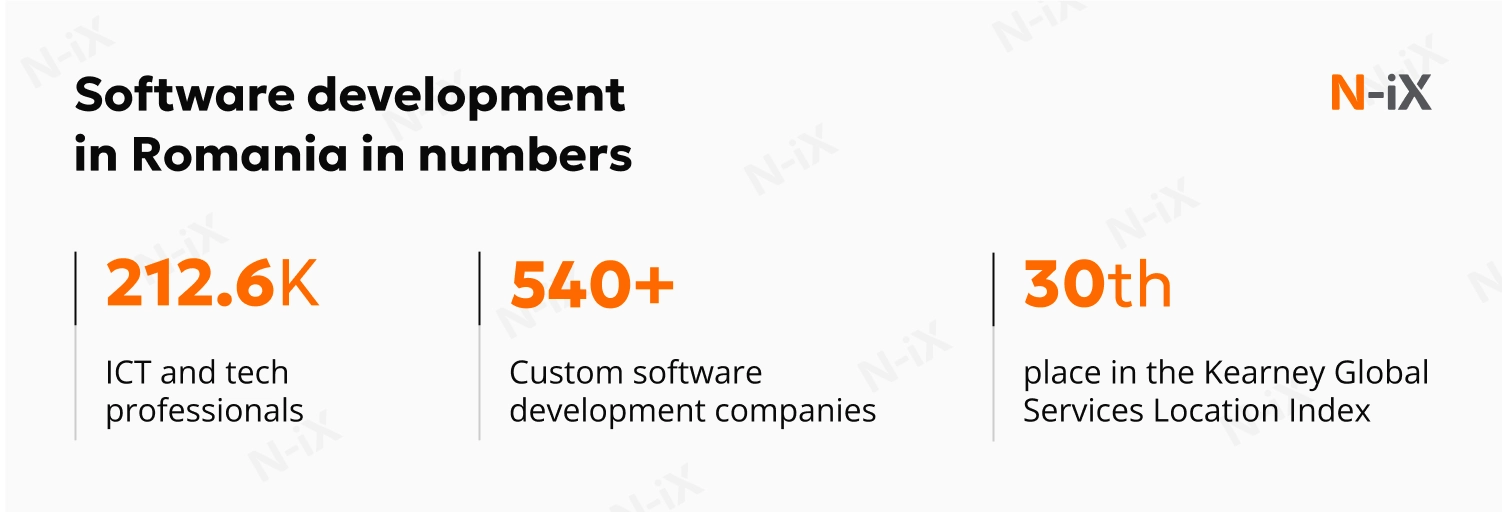
Romania has established itself as a prominent hub for software development outsourcing. With more than 212,000 developers in Romania as of 2024, the country has a large pool of experienced tech experts capable of solving complex technical problems. Bucharest, Cluj-Napoca, Iasi, and other Romanian IT hubs are home to companies that deliver high-quality software development services to businesses in the US and the EU.
When exploring software development in Romania, it's crucial to examine the Romanian ICT market, tech talent pool, and the engineering capabilities of local IT vendors. Understanding these aspects will help you determine if this location aligns with your tech needs.
A look at Romania's IT sector
The technology sector in Romania has been experiencing steady growth, primarily fueled by a highly qualified workforce. Notably, the ICT sector in Romania accounts for approximately 6.2% of the country's GDP. Total turnover for the ICT sector hit $27.6B in 2024, primarily led by the IT segment at $20.7B.
Romania hosts over 540 software development companies, each with diverse technical and domain expertise across IT, business and financial services, healthcare, and other industries. The ICT sector employs approximately 3% of Romania's total workforce.
Software development in Romania has been driven by tech hubs in Bucharest, Cluj-Napoca, Timisoara, and Iasi, which concentrate IT talent and outsourcing companies. Romania's 2007 EU membership catalyzed its IT sector, attracting global giants such as Huawei, Hewlett-Packard, Ericsson, and Adobe to establish operations there. Furthermore, Microsoft's regional department operates two global business support centers in Bucharest and Timisoara.
Romania's strong position as an outsourcing destination is evident from its 30th-place ranking in the Kearney Global Services Location Index 2023. The GSLI assesses countries as offshore business service locations, taking into account labor costs, infrastructure, available skills, service quality, business environment, and political risks. Romania scored higher than many European countries, including Ireland and the Netherlands, further solidifying its reputation as an attractive destination for software development in Romania. This recognition has led companies across industries, including telecom, manufacturing, and ecommerce, to establish R&D centers and offices in Romania.
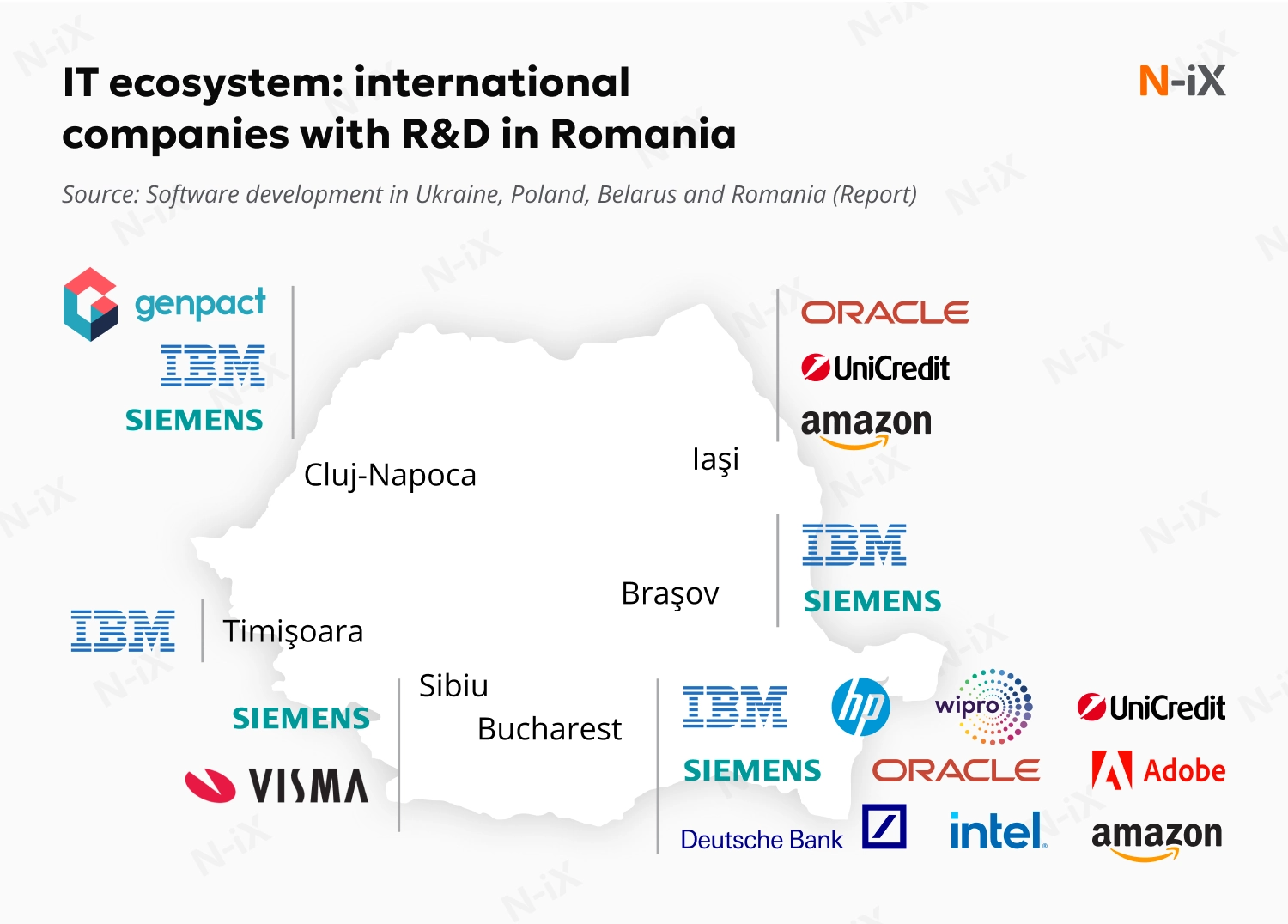
Among the major players making their mark in the country, Oracle stands out as the largest employer, with a workforce of 4,000. Furthermore, Adobe Romania is the company's most prominent R&D Center in EMEA, underscoring its commitment to innovation in Romania. Amazon's Development Center in Iasi is the company's first R&D center in Eastern Europe. This investment solidifies Romania's position as an attractive destination for global tech giants seeking top talent. Multinational presence reinforces Romania's reputation as a reliable outsourcing hub, offering abundant resources and skilled professionals for diverse software development projects.
The presence of major tech players in Romania underscores the country's strong tech ecosystem and its ability to nurture cutting-edge research and development. It also underscores the availability of skilled tech professionals and the conducive environment for innovation and technological advancement. As these global tech giants invest in Romania, it further solidifies the country's position as an attractive destination for software development and technology investments. This enhances Romania's reputation as a reliable and competitive player in the global tech industry.
To support the continued growth of the IT industry, the Romanian government actively promotes software development. It implements measures such as exempting software engineers from the 16% income tax and introducing various incentives to bolster local IT companies. This has fostered the growth of a digital economy and created a business-friendly environment. As a result of these positive changes, Romania achieved the highest FDI project growth in Central and Eastern Europe in 2024 with a 57% increase. The country attracted approximately $12.5B in FDI and climbed to 13th place in Europe's FDI attractiveness index. Key investment drivers included market access, supply chain efficiency, and technology opportunities.
Get a complete overview of the 2024 software development market in Romania!
Success!
Software development companies in Romania
Although small vendors currently account for approximately 90% of all IT companies in the Romanian tech market, they are growing in both number and size. In 2025, the number of large vendors employing 250+ professionals in Romania has reached 49. Among these, 11 companies have workforces exceeding 1,000 employees; two have surpassed 10,000 employees.
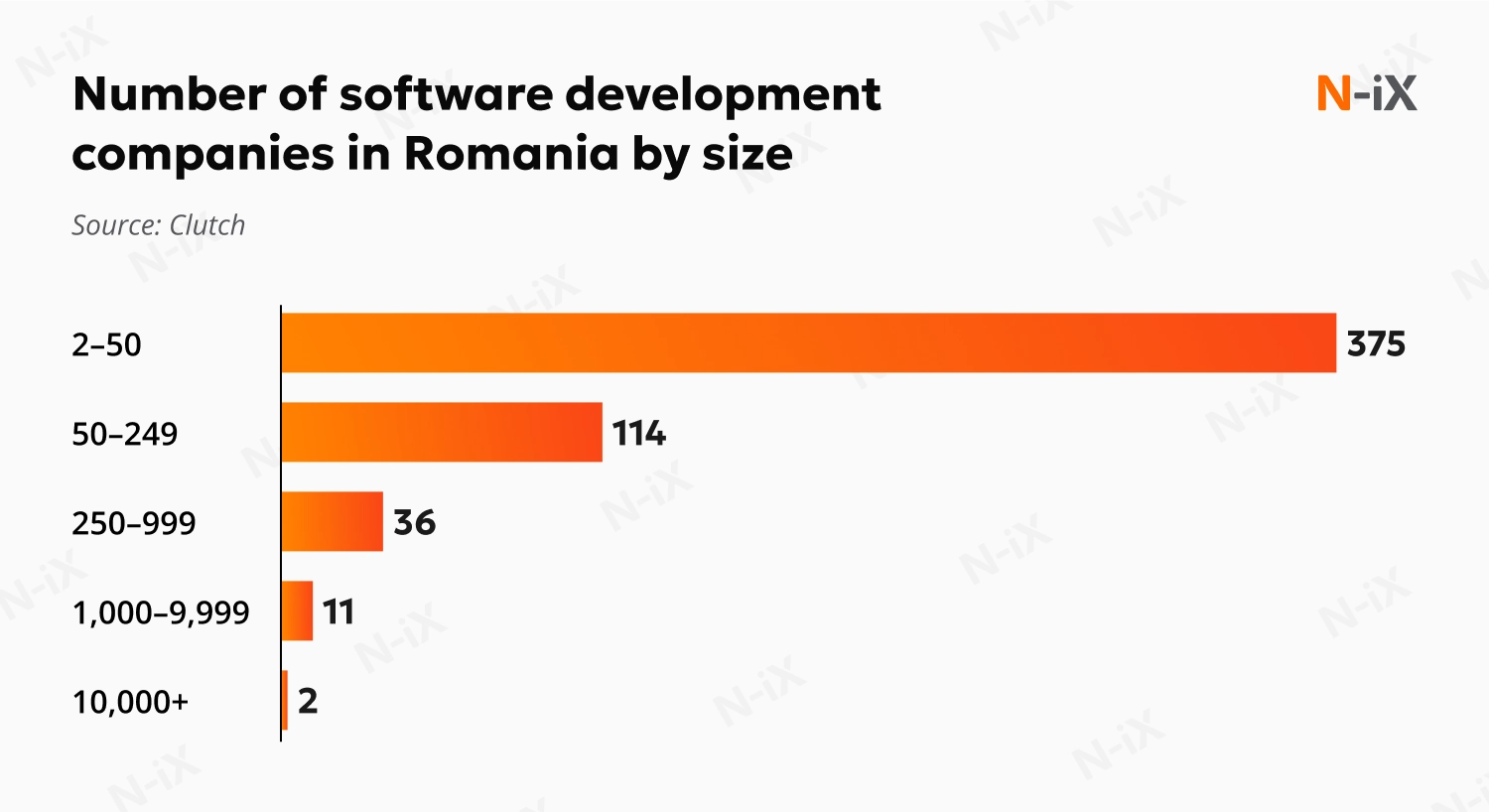
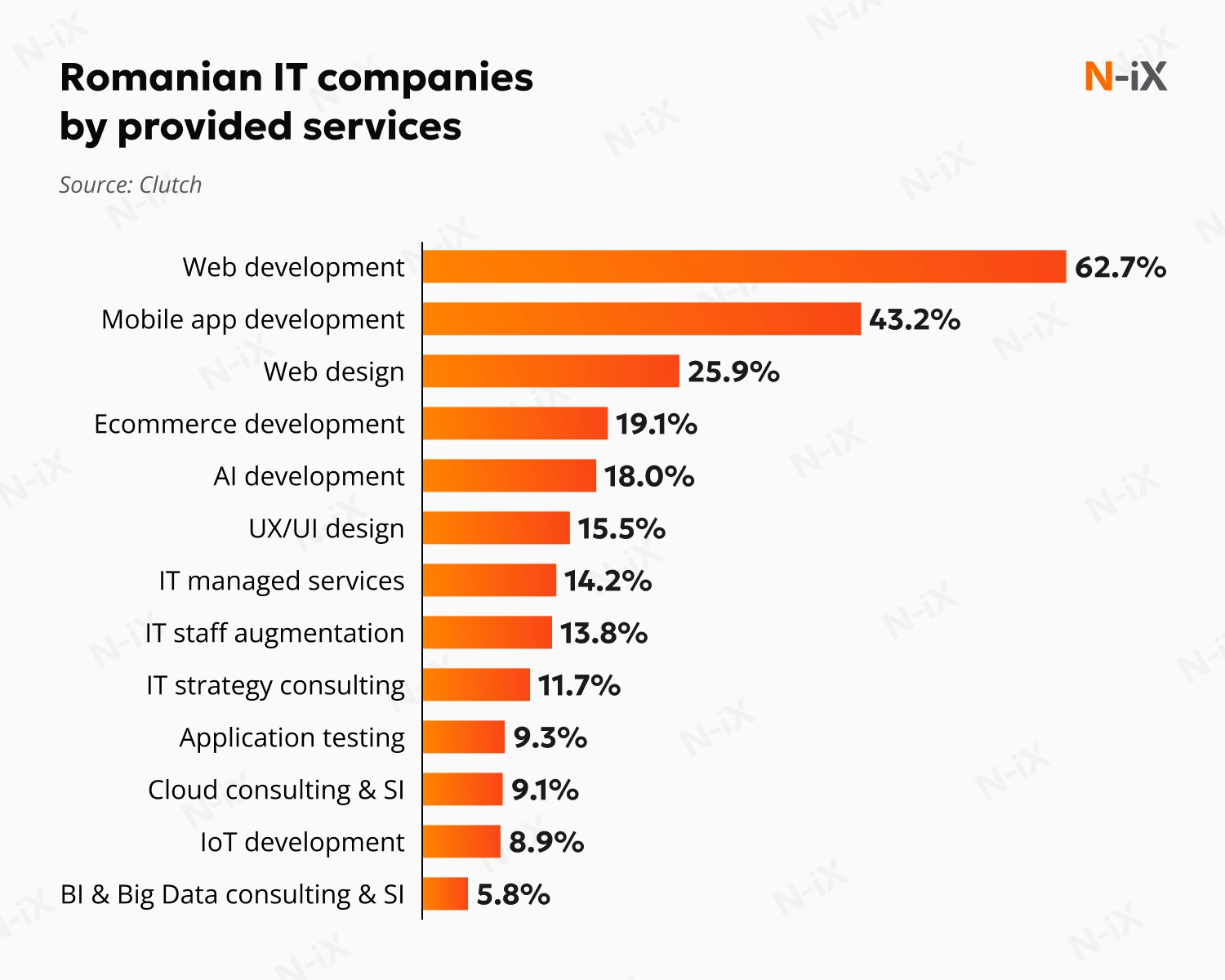
This steady expansion in the number and size of IT companies demonstrates the potential for further growth and development in the Romanian tech industry. There is also an increase in the variety of services offered by software development companies. Romanian companies' most common software development services are web development, mobile app development, ecommerce development, user interface design, and IT strategy consulting.
Keep reading: Partner with a software development team in Romania
IT professionals in Romania
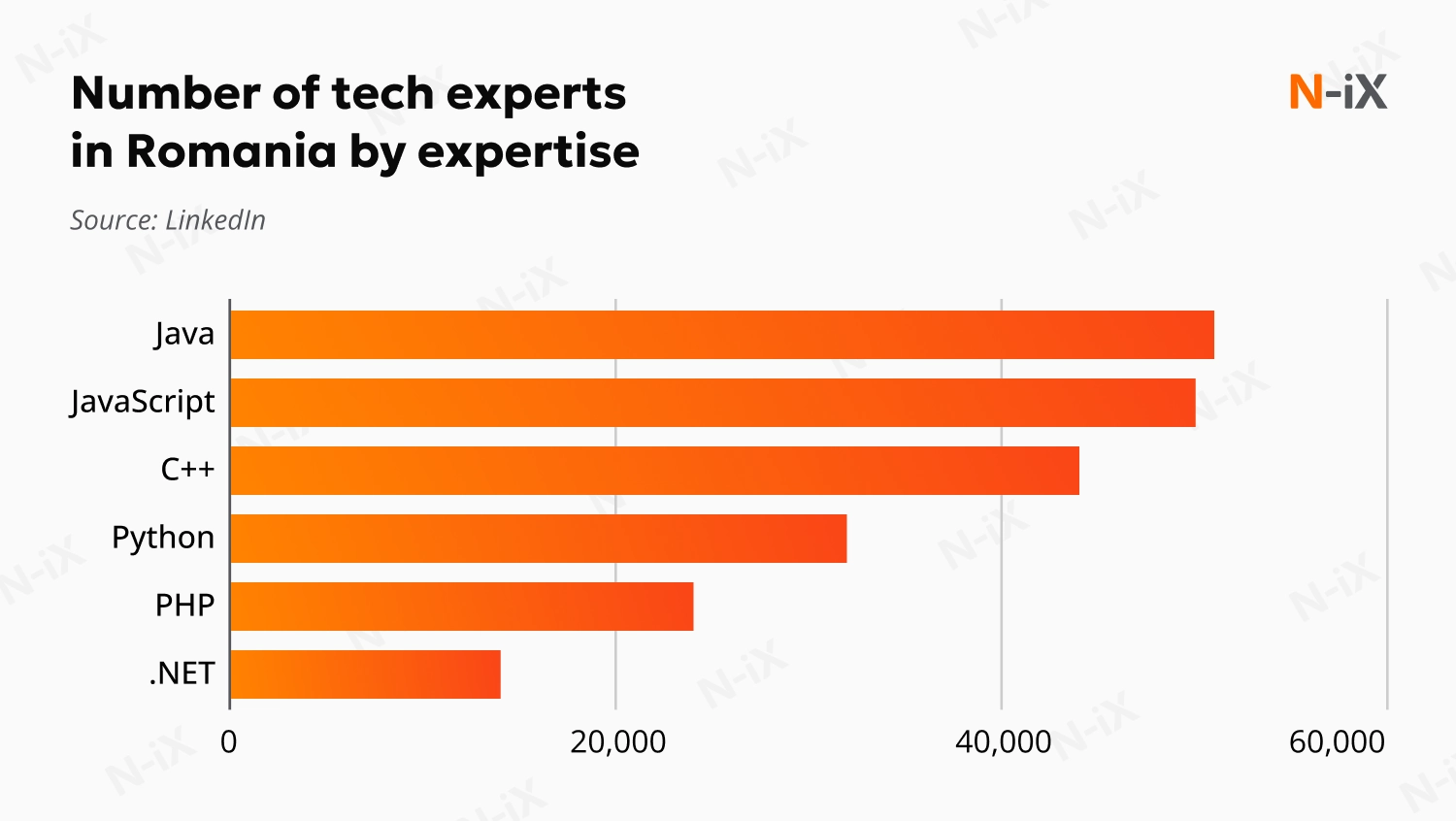
Romania has the highest number of certified IT specialists in Europe and sixth globally, with more tech specialists per 1,000 residents than the US. Romania's IT industry employs approximately 212,000 ICT specialists.
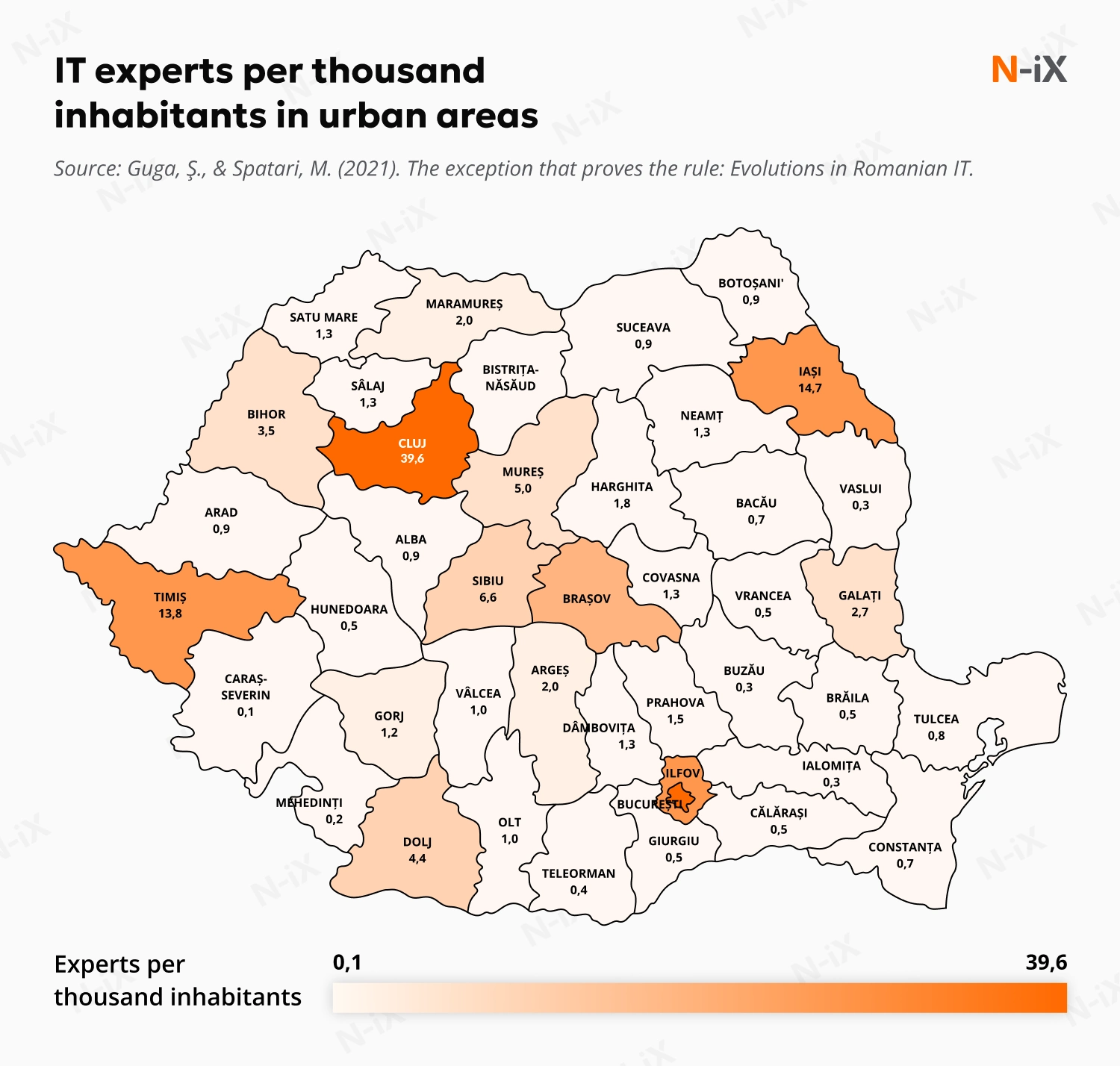
The country has gained recognition for its high-quality IT services, ranking 23rd in SkillValue and 4th in the TopCoder rankings. Additionally, Romania ranked 11th in the EF EPI, resulting in a pool of highly skilled English-speaking professionals. That's why so many global leaders choose IT staff augmentation in Romania .
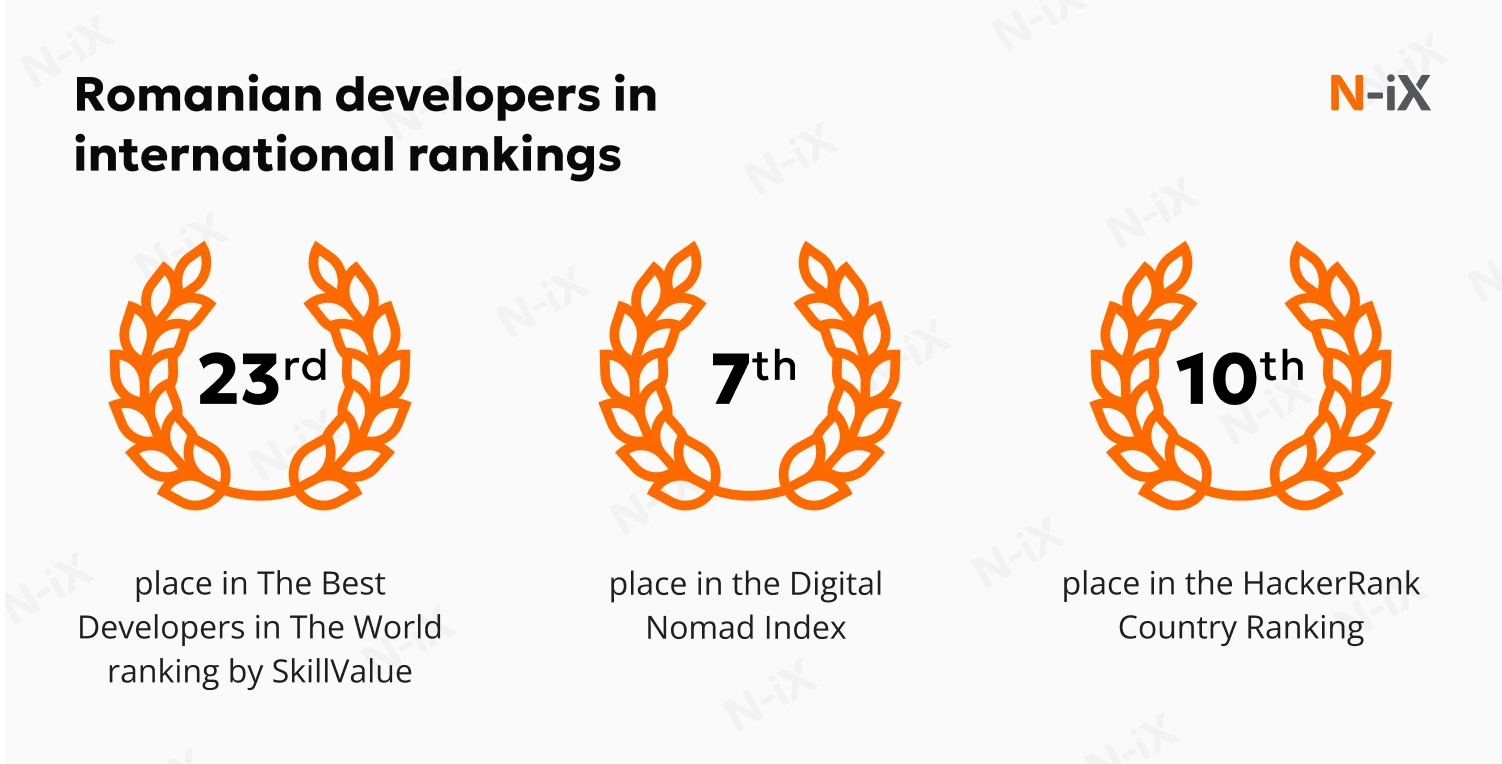
The ICT sector in Romania has seen significant growth in recent years, with average gross salaries increasing by 54,5% in 2023. The average salary in the ICT sector is twice the economy-wide average wage. At the same time, programmer salaries in Romania are 20% to 50% lower than in the European or American markets. This cost advantage makes outsourcing custom software development to Romania an attractive and cost-effective option for businesses seeking high-quality expertise at a more competitive rate.
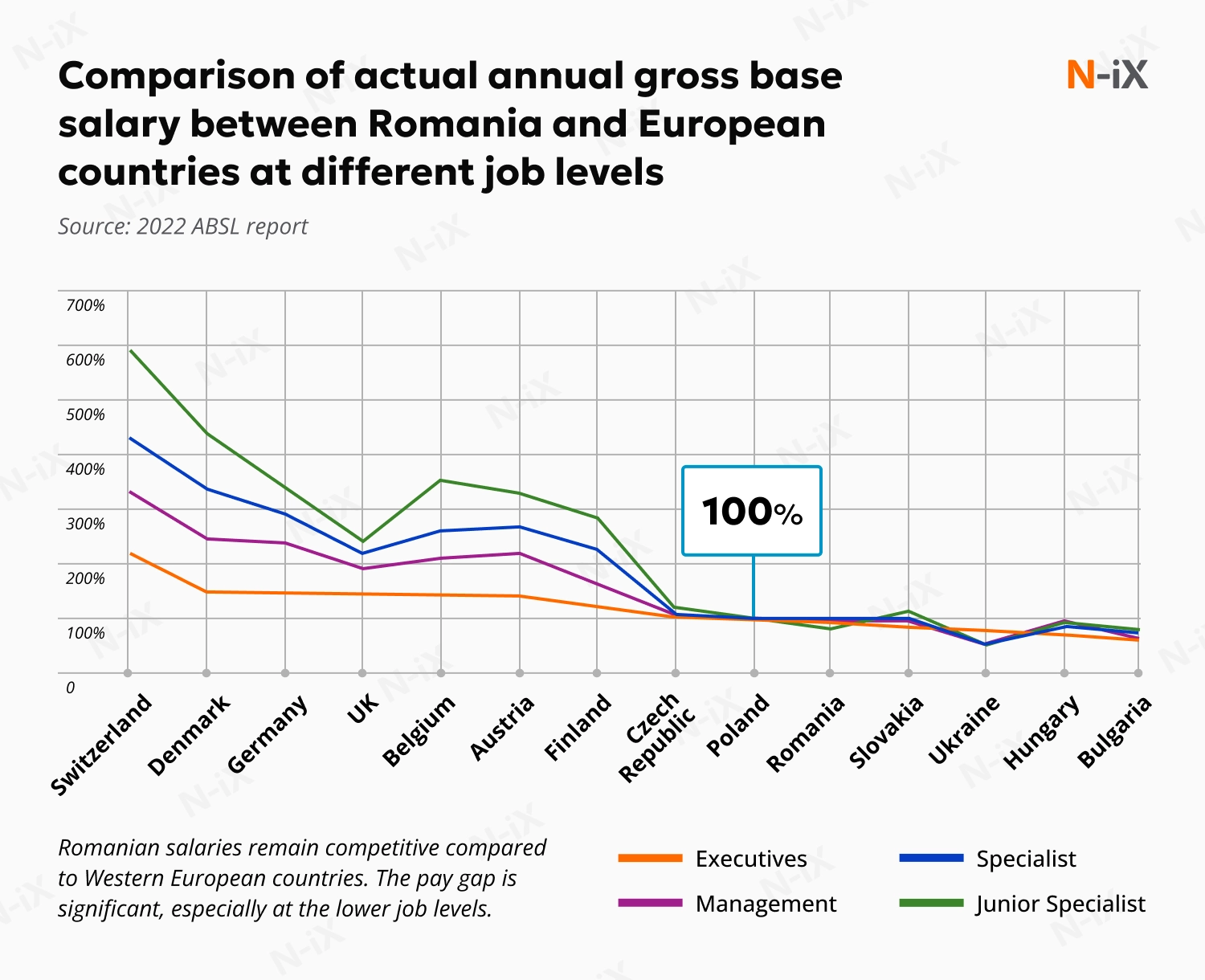
The most popular programming languages in Romania are Java and JavaScript, followed by C++ and Python. As a result, local engineers have experience in enterprise solutions, custom software development, and Data Science and Machine Learning.
ICT education in Romania
Romania has 49 public and 8 private universities. Babes-Bolyai University, the University of Bucharest, and the University of Bucharest rank among the country's top three in the QS World University Rankings 2026. They provide IT professionals to Romanian tech hubs, including Cluj-Napoca, Bucharest, Iasi, and others.
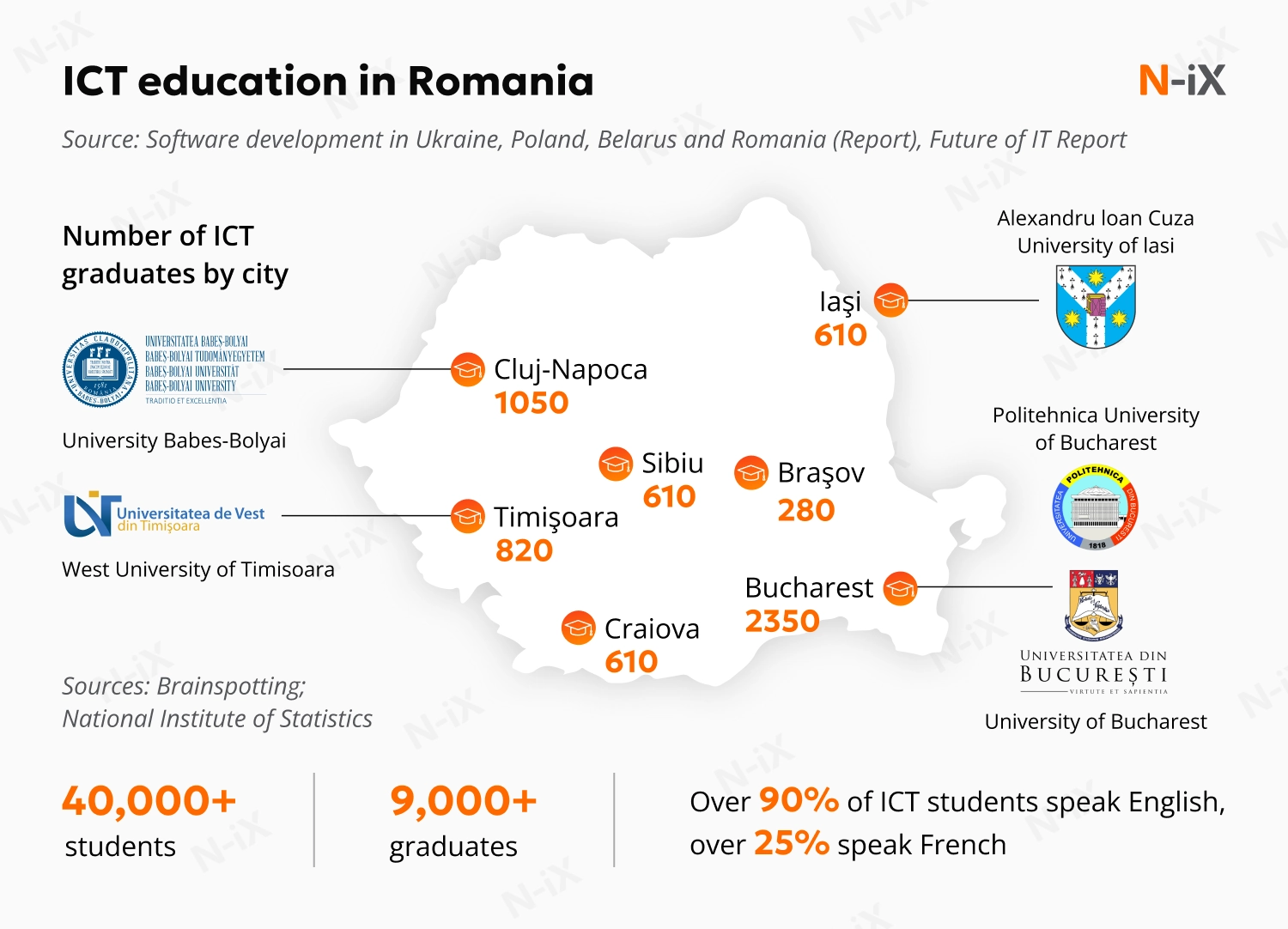
Recently, Romania has seen an uptick in the number of students and graduates in the ICT sector. In 2022, there were around 40,000 ICT students in the country. Moreover, 6.9% of all postsecondary education graduates are ICT specialists, putting Romania among the EU’s leaders. With such an impressive number of ambitious young tech professionals and an environment that fosters innovation, it is no surprise that Romania’s start-up scene is thriving.
Romanian startups
Romanian tech entrepreneurs have founded hundreds of startups, including over 400 fintech companies. Additionally, software, data, foodtech, and sales and marketing are highly competitive among Romanian startups. Romania ranks 48th worldwide in the Global Startup Ecosystem Report 2025. Despite losing its position in the top 40, it is still in the top 30 in the EU and among the top 10 in Eastern Europe. Moreover, software development investments in Romania are increasing. The amount of funding raised by tech companies in Romania reached a record $270M in 2022, according to Dealroom. The ecosystem continued to attract substantial capital in 2024, with about $285M in announced rounds and over $93M raised in the first half of 2025.
Future-ready infrastructure and emerging technologies
Software development in Romania is rapidly evolving beyond traditional outsourcing into cutting-edge technology innovation. Strategic government investments in semiconductors, quantum computing, and artificial intelligence are transforming the country's technology sector.
Romania committed $458M in 2024 to develop a national semiconductor ecosystem that unites European manufacturers, universities, and SMEs. The BMW TechWorks Centre partnership positions Romania as a critical automotive supplier for embedded systems and IoT software development. The $142M National Platform will establish three production lines to enable custom software development in Romania for hardware integration.
Romania's National Quantum Technology Strategy, adopted in August 2024, establishes frameworks for quantum infrastructure and industry development. The RoNaQCI project is deploying a 1,500+ kilometer quantum communication network connecting six metropolitan areas with $11M in funding. As a participating state in the EuroHPC Joint Undertaking, Romania provides access to high-performance computing resources for complex simulations and AI software development.
The Romanian AI Hub (HRIA), launched in September 2024, represents a $71M investment coordinated by Politehnica University Bucharest. This collaboration between seven universities and eight private companies is developing research infrastructure and training AI specialists. Software development companies in Romania are increasingly positioning themselves to deliver AI solutions, leveraging strong technical talent and improving AI infrastructure.
Romania is expanding its 5G infrastructure to support industrial IoT, digital twins, and real-time data processing, particularly for the growing manufacturing sector. The government plans to expand edge node deployment to support AI and advanced manufacturing applications.
Romania's transposition of the NIS2 Directive in December 2024 strengthens data protection standards, making software development outsourcing in Romania a secure choice for enterprises. Romanian software development companies are developing specialized cybersecurity expertise, with 91.67% of enterprises already deploying comprehensive ICT security measures.
$180M government cloud infrastructure project is scheduled for June 2026. This infrastructure development provides software development companies in Romania with experience in large-scale cloud deployments, security implementations, and enterprise architecture. Companies that outsource to Romania benefit from engineers trained in modern cloud technologies and government-grade security standards.
Public holidays
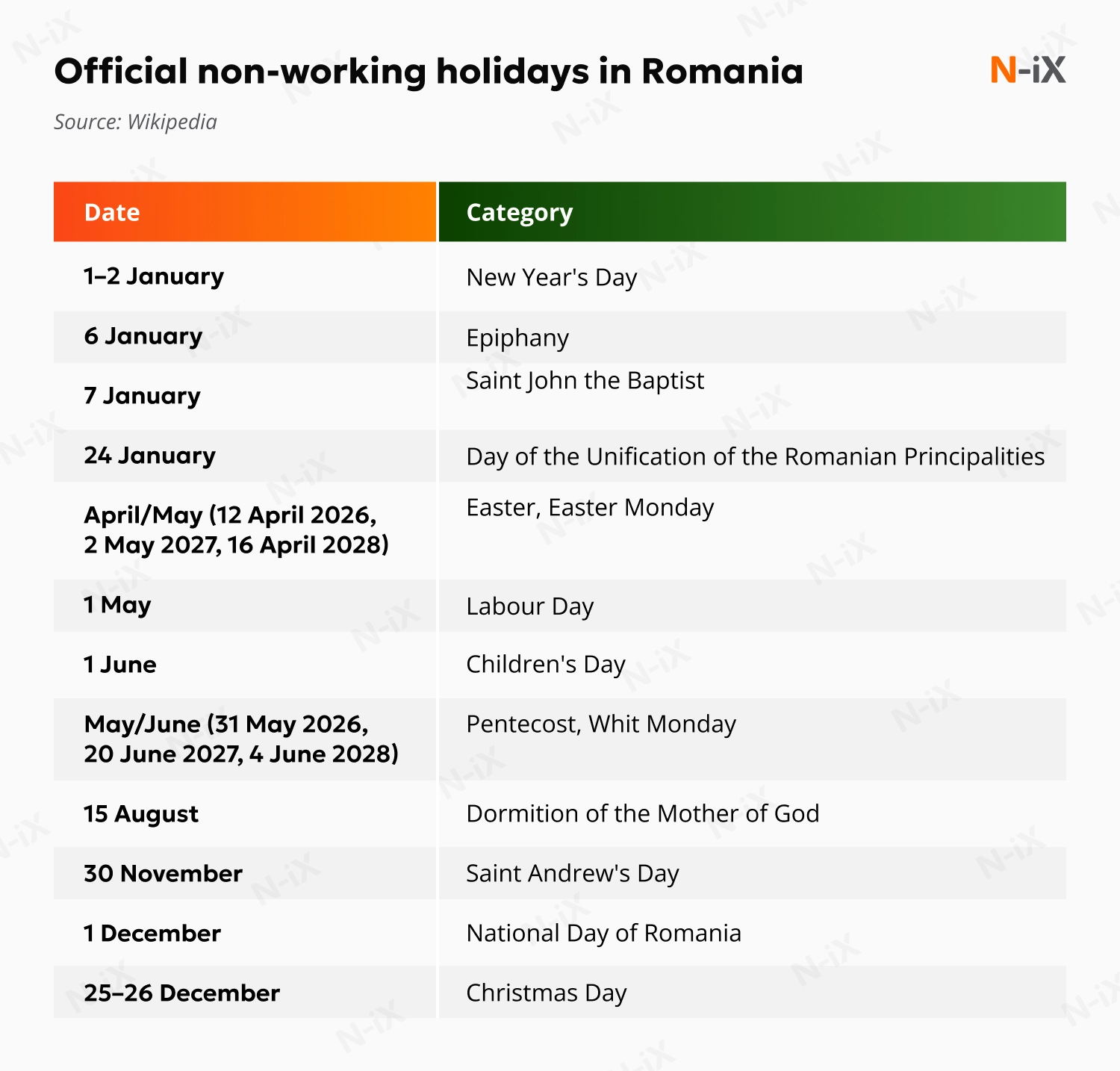
Romania's Labour Code recognizes only eight official holidays throughout the year. In addition to public holidays, Romania recognizes religious observances. It is not a public holiday, and time off is granted under the terms of a contract of employment or an informal company agreement.
Because software development in Romania is largely unaffected by religious traditions, the availability of developers and project timelines will not be significantly affected.
Advantages of custom software development in Romania
Romania has emerged as an attractive destination for custom software development, combining technical excellence, cost efficiency, strategic location, diverse expertise, and a thriving innovation ecosystem. Let's explore these advantages in detail.
Cost efficiency with European quality standards
Programmer salaries remain 20-50% lower than Western European or American markets while delivering comparable quality. This allows companies to access senior-level talent at mid-level Western rates or build larger teams within fixed budgets. Romania’s software development operates within EU regulatory frameworks, ensuring GDPR compliance, IP protection, and adherence to European business standards, thereby reducing legal risks compared to other offshore locations.
Strategic location and communication
Romania operates on Eastern European Time (UTC+2/+3), providing convenient overlap with Western European business hours (a 1-2 hour difference) and extended Asian coverage. Direct flights connect Romanian cities to major European centers within 2-3 hours. Romania's EU membership since 2007 has ensured the free movement of professionals and simplified contracting.
Romania ranks 11th globally in English proficiency. Software development companies in Romania have extensive experience working with US and EU clients and maintain established processes for remote collaboration, agile methodologies, and project management.
Diverse technical and domain expertise
Romania's 540+ software development companies offer expertise across diverse technologies and verticals. Common service areas for custom software development in Romania include web development, mobile apps, UI/UX design, and IT strategy consulting. Romanian engineers excel in Java, JavaScript, C++, and Python, with growing expertise in AI/ML, data science, cloud architecture, and cybersecurity.
Industry expertise spans financial services, healthcare, telecommunications, automotive, manufacturing, and ecommerce. Major companies operate in Romania, including Oracle, Adobe, Microsoft, Amazon (the first Eastern European R&D center), HP, Huawei, and Ericsson. These create a mature ecosystem of experienced professionals.
Growing innovation ecosystem
Bucharest's startup ecosystem reached a $38.1B valuation in 2023, ranking among the top 10 emerging cities globally, according to Startup Genome. Romania has developed successful startups in robotics, automation, cybersecurity, fintech, and ecommerce, creating entrepreneurial talent for software development in Romania.
Stable environment and government support
As an EU member, Romania offers political stability and legal predictability. The ICT sector accounts for 6.67% of GDP (2024) and continues to grow steadily. Government support includes $6.75B in EU-funded digital transformation initiatives through 2026, ensuring continued investment in infrastructure, education, and innovation.
Key hubs for software development in Romania
IT and outsourcing firms in Bucharest, Cluj-Napoca, Timișoara, Iasi, and other cities employ over 220,000 people, primarily employees, freelancers, and remote workers for foreign companies. Romanian IT hubs are distributed across the country, providing a convenient, accessible network of tech centers.
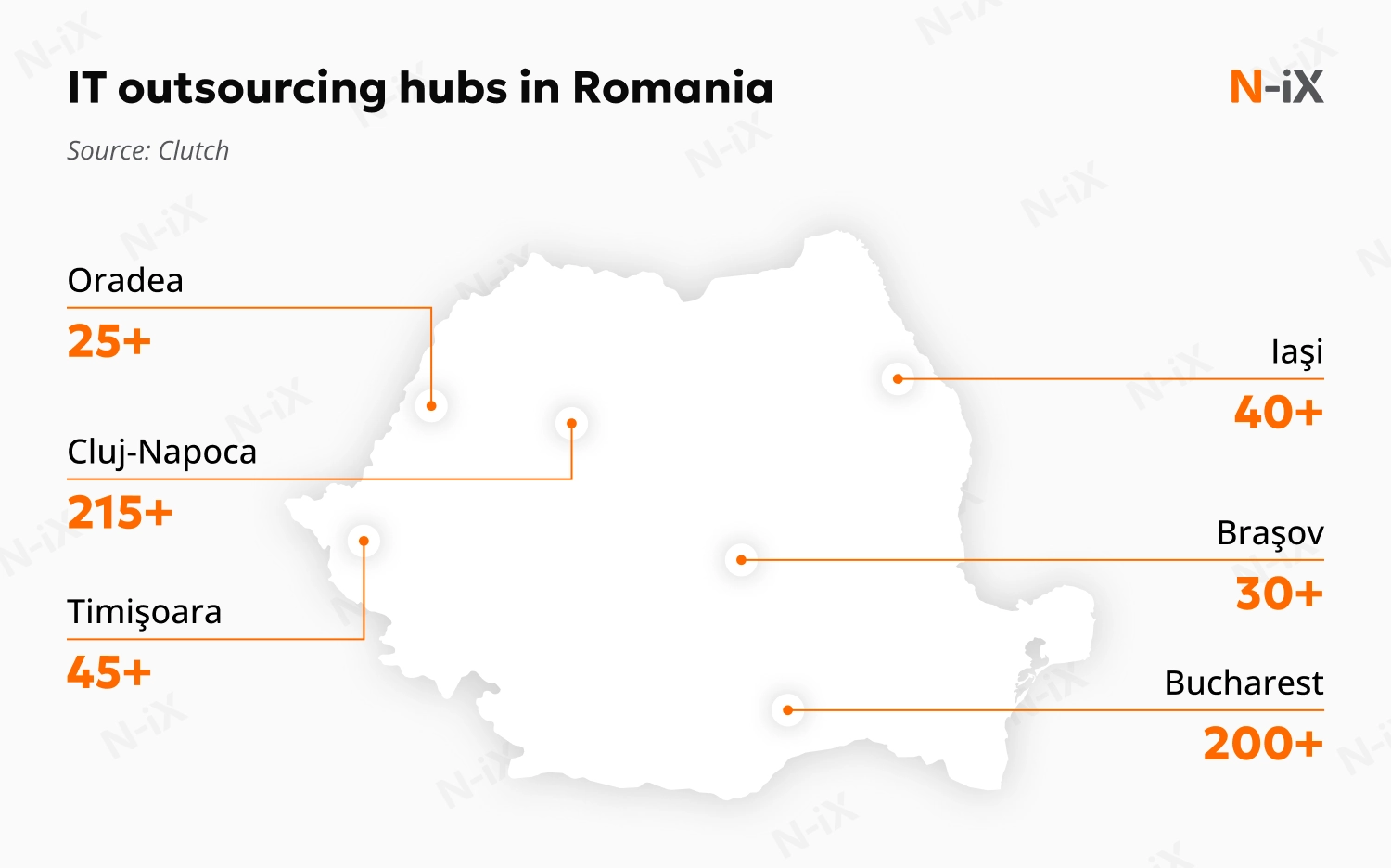
Beyond Bucharest, Cluj-Napoca has established itself as a hub for ecosystem developers with an international mindset. According to StartupBlink, Cluj-Napoca has positioned itself as both a Smart City in the making and an IT cluster. Let’s take a more detailed look at Romanian tech hubs.
Bucharest
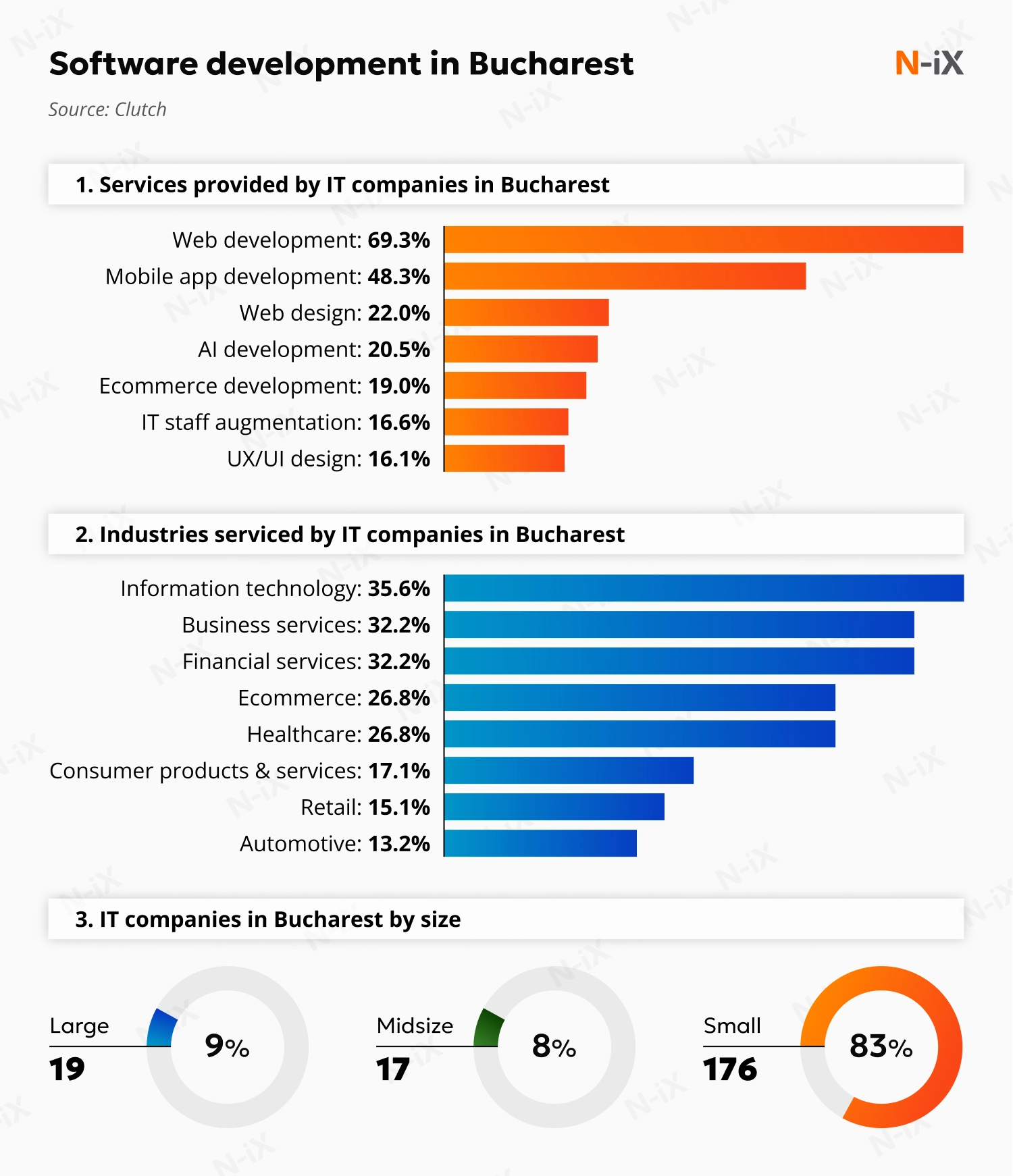
In Bucharest, the capital and a thriving center for software development in Romania, 207 custom software vendors operate, including one large tech company with over 10,000 employees. Most of these vendors are small and medium-sized, with up to 250 engineers. A total of 25 companies operate at scale, with up to 10,000 professionals on their payrolls.
In Bucharest, IT companies offer a diverse range of services to meet a wide range of business needs. Among these services, web development and mobile app development stand out, accounting for 69.3% and 48.3%, respectively. Web design and AI development follow closely, contributing 22% and 20.5% to the service portfolio, respectively. Additionally, ecommerce development and IT staff augmentation make up 19% and 16.6% of the services offered, respectively.
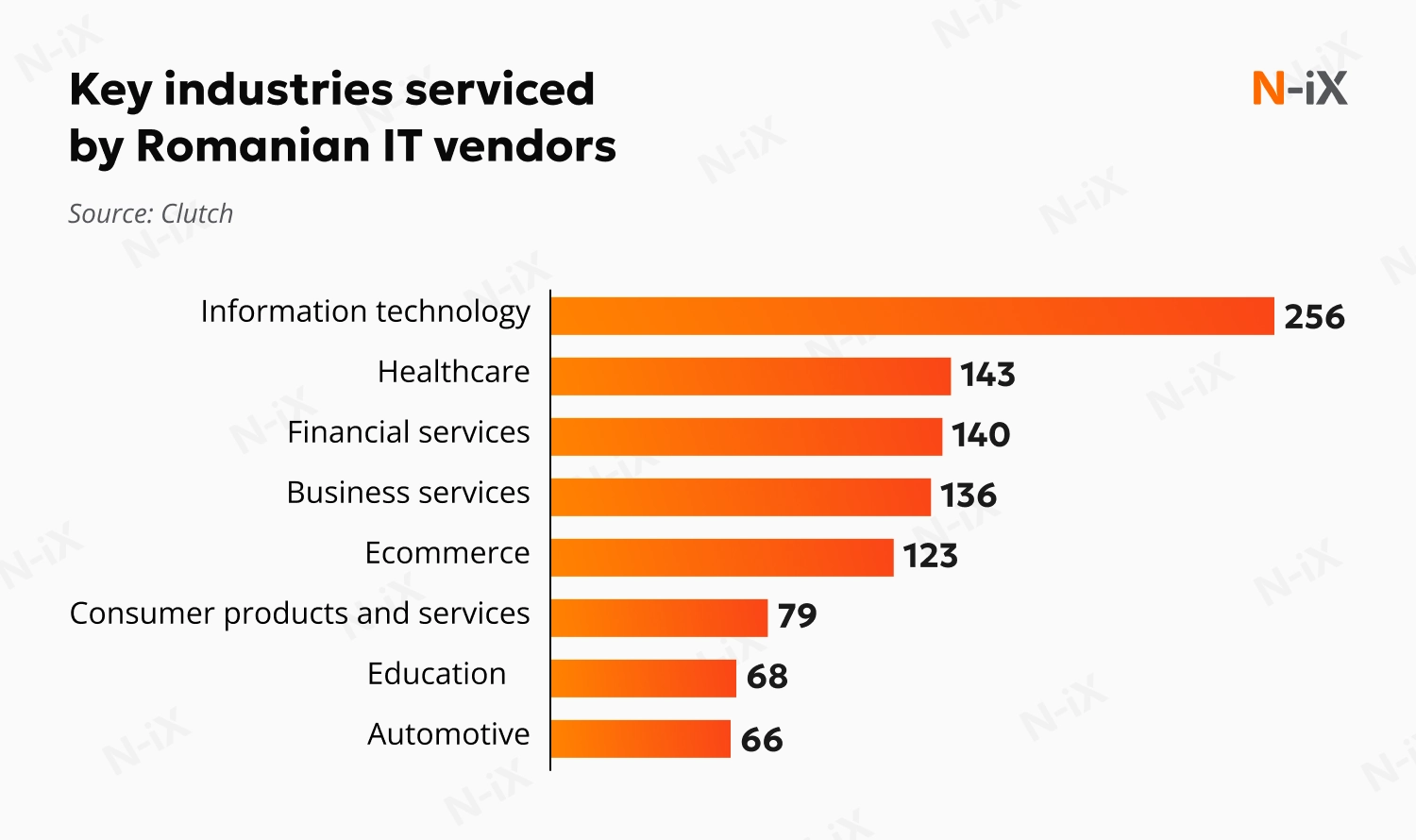
Across industries, IT companies in Bucharest demonstrate remarkable versatility. Information technology itself leads at 35.6%, reflecting the strong presence of tech companies serving other technology businesses. Business services and financial services are equally prominent recipients of IT expertise, each accounting for 32.2% of the industries served. The Ecommerce and healthcare sectors also represent significant markets, each accounting for 26.8% of the industries served by Bucharest's IT companies.
Beyond these primary sectors, IT companies in Bucharest also serve consumer products and services (17.1%), retail (15.1%), and automotive (13.2%). This diverse portfolio showcases Bucharest as a dynamic IT hub that meets diverse technological needs across multiple sectors. The city serves traditional industries such as automotive, alongside rapidly evolving fields such as ecommerce and healthcare technology.
Cluj-Napoca
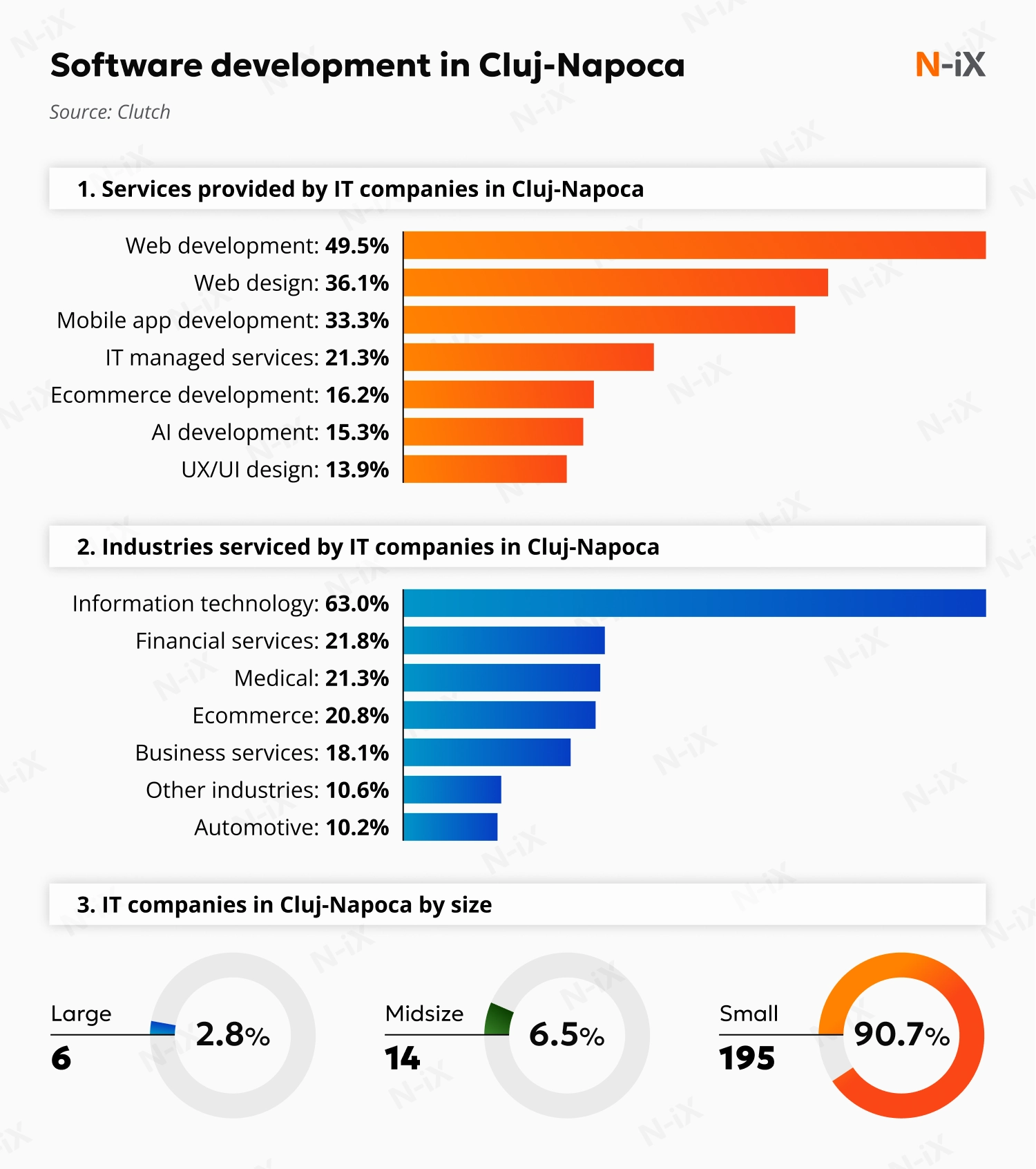
Not to be outdone by Bucharest, Cluj-Napoca has its own software development company with 10,000+ employees and 19 other large companies. Over 200 vendors have set up offices at this location, including 68 midsize firms.
The Cluj-Napoca IT industry offers a comprehensive range of services to meet diverse business needs. Web development accounts for 49.5% of service offerings, followed by web design at 36.1%. Mobile app development accounts for 33.3%, while IT-managed services account for 21.3% of capabilities. Additionally, ecommerce development (16.2%), AI development (15.3%), and UX/UI design (13.9%) round out the primary service portfolio offered by IT companies in Cluj-Napoca.
Across the industries served by IT companies in Cluj-Napoca, the sector demonstrates strong versatility across multiple domains. Information technology itself dominates at 63.0%, reflecting the concentration of tech companies serving other technology businesses. The financial and medical sectors are also prominent recipients of IT expertise, accounting for 21.8% and 21.3% of the industries served, respectively. Ecommerce and business services are significant markets, accounting for 20.8% and 18.1% of the sectors served. Additionally, other industries benefit from Cluj-Napoca's IT capabilities, which collectively account for 10.6% of the market.
This diversity underscores Cluj-Napoca's position as a thriving technology hub, delivering sophisticated digital solutions across sectors and driving regional innovation.
Iasi
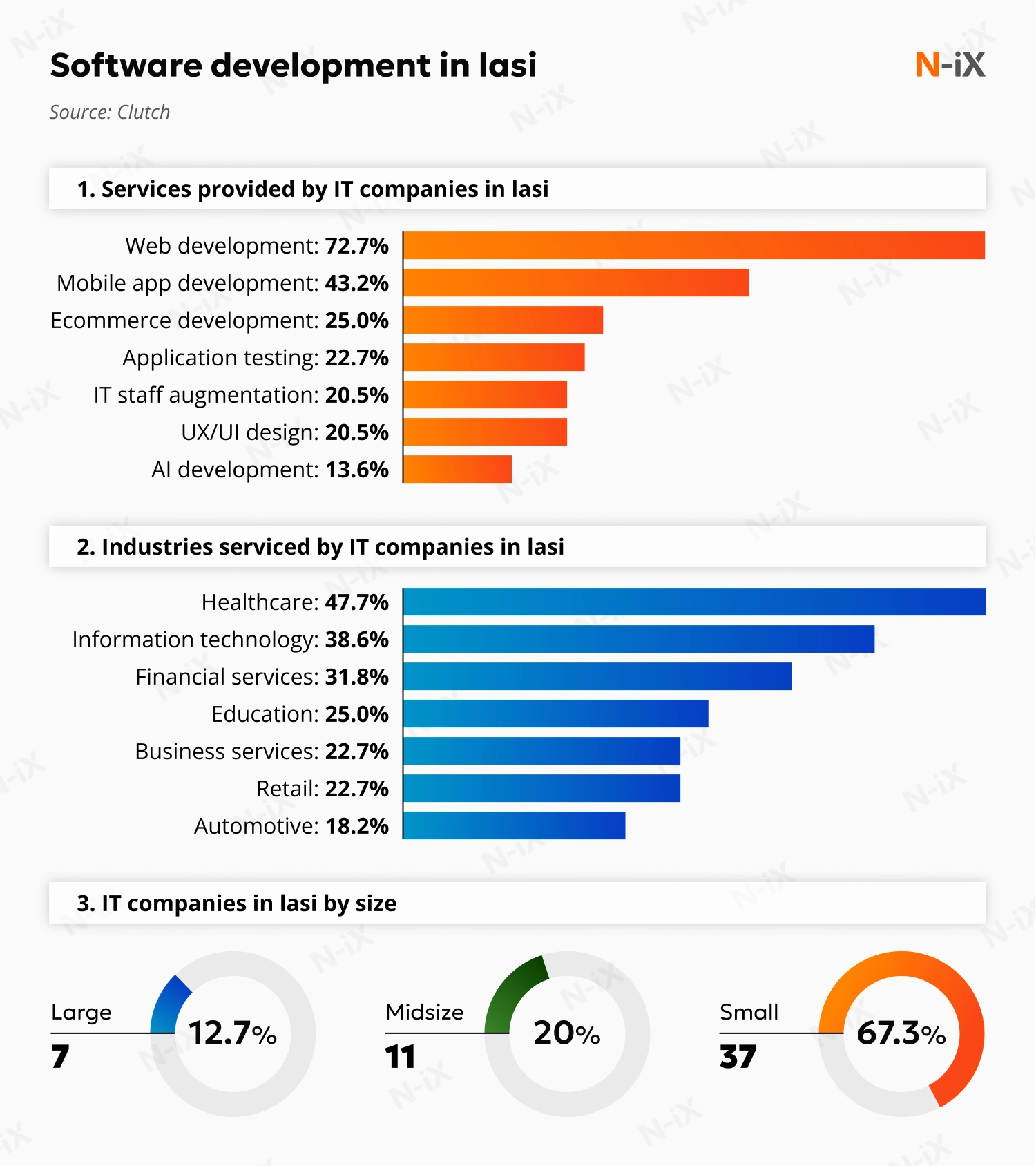
Iasi is home to seven midsize and seven large IT companies, including two vendors with over 1,000 employees. The IT sector in Iasi offers a robust portfolio of services to meet varied business requirements. Web development dominates service offerings at 72.7%, while mobile app development accounts for 43.2% of capabilities. Ecommerce development accounts for 25% of services, followed by application testing (22.7%), IT staff augmentation (20.5%), and UX/UI design (20.5%). AI development also accounts for 13.6% of the service mix, reflecting the city's engagement with emerging technologies.
Among the industries served by IT companies in Iasi, the healthcare sector is the primary beneficiary, accounting for 47.7% of IT services. Information technology and financial services follow as major recipients, accounting for 38.6% and 31.8% of the industries served, respectively. Education is another notable sector, accounting for 25% of the market. Business services and retail each account for 22.7% of the industries served, while automotive accounts for 18.2%.
This demonstrates Iasi's capability as an emerging technology center, with particular strength in healthcare IT and broad competencies across business sectors.
Why do companies choose software development outsourcing in Romania? A summary
Romania is a reliable and cost-effective outsourcing destination for companies worldwide. The country has a large, skilled tech talent pool, versatile technical and industry expertise, and a convenient location.
The primary factors driving this choice include:
-
Competitive rates: Romania's cost of living is significantly lower than Western Europe or the US, enabling companies to reduce costs through software development outsourcing. A lower cost of living translates to lower labor costs for companies hiring local talent or outsourcing to Romanian software development companies. This cost advantage enables businesses to access a highly skilled workforce at a lower cost than in Western European or American markets. Additionally, other operating expenses, such as office space, utilities, and administrative costs, are also comparatively lower in Romania, contributing to overall cost savings.
-
Exceptional qualifications: Romanian engineers engaged in software development are highly skilled and well educated. Many hold degrees from top universities in the region and are proficient in multiple programming languages and technologies.
-
Well-established infrastructure: This includes a reliable telecommunications network, a skilled workforce, and a favorable business environment that supports software development outsourcing.
Why choose N-iX as a software development company in Romania?
- N-iX boasts over 2,400 tech experts, with our 70+ recruitment specialists ready to help you hire top developers in Romania.
- With over two decades of experience, we've built long-term partnerships with businesses across the USA, UK, Germany, and Nordic countries. N-iX has earned trust and recognition from reputable institutions, including Zinnov, IAOP, GSA, Inc. 5000, Software 500, and Clutch.co
- CRN consistently recognizes us as a leading North American solution provider, including Solution Provider 500 and Fast Growth 150 rankings.
- N-iX holds prestigious certifications, including Advanced AWS Partner, Microsoft Gold Partner, Google Cloud Platform Partner, OpenText Services Silver Partner, and SAP Partner.

Sources:
- Business Review, 2025. IT&C remains key economic engine in Romania with 6.67% of GDP, but faces growing pressure on wages and profits - Business Review
- Emerging Europe, 2024. Future of IT Report
- EY Romania, 2025. EY Romania Attractiveness Survey: 58% of investors expect Romania’s attractiveness to improve over the next three years
- European Commission, 2025. Romania 2025 Digital Decade Country Report
- Podim, 2026. Powering Romania’s next wave of startup success
- The Recursive, 2025. 10 Biggest Funding Rounds in Romania (H1 2025): DRUID AI Leading the Top
- EF EPI, 2025. EF English Proficiency Index
- Clutch, 2026. Top Software Developers in Romania - Jan 2026 Rankings
Have a question?
Speak to an expert