
 ChatGPT
 Perplexity
 Claude
 Gemini
 Grok
Grok
Legacy systems rarely announce their cost. It accumulates in maintenance overhead, integrations that take months instead of weeks, and features that can't be shipped because the foundation isn't ready. According to Gartner, companies spend up to 80% of their IT budgets on maintaining existing systems, leaving only 20% for the work that drives growth.
Modernization done right can drastically change that ratio. This article covers four real-life N-iX application modernization case studies for you to see for yourself.
But first, let’s take a look at the reasons why app modernization can no longer be postponed.
Why is application modernization urgent right now
Technical debt is compounding. Every year a legacy system operates, the cost to maintain, integrate, or replace it grows. Teams that delay modernization often find themselves locked into systems that can no longer support regulatory requirements, API integrations, or modern UX expectations.
Learn more about tech debt management
Customer expectations have shifted permanently. Post-pandemic digital behavior normalized real-time, personalized, mobile-first experiences. Organizations running on batch-processing mainframes or monolithic ERP systems struggle to keep pace.
AI and data integration require modern foundations. Machine Learning pipelines, real-time analytics, and AI-powered features require clean, accessible data architectures. Legacy systems with siloed data stores and rigid schemas are fundamentally incompatible with modern AI tooling.
Cloud-native economics favor agility. Elastic scaling, pay-per-use infrastructure, and managed services have changed the cost calculus of modernization. What once required massive capital expenditure can now be achieved incrementally with operating expense.
While these reasons are pretty different from one another, they have one thing in common. That is, legacy systems can rarely withstand the ever-growing competition. Now, let’s take a look at the businesses that modernized their systems and benefited from it.
Application modernization case study #1: Modernizing investment functionalities for a global financial services group
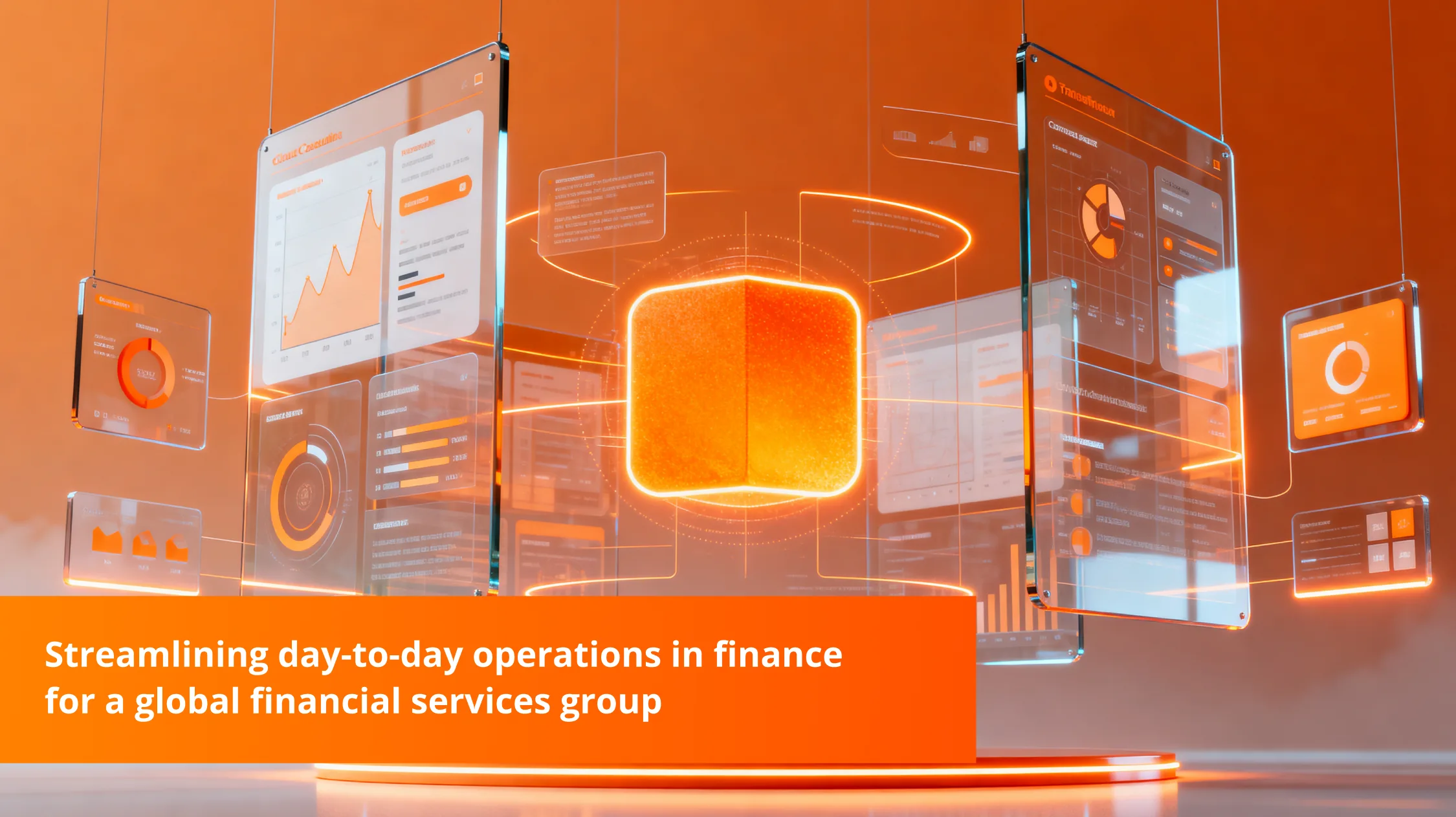
Our customer is a global financial services group operating across South Africa, the UK, the US, China, Singapore, and Australia. They offer insurance, asset management, savings, and investment products. Investment workflows were running on a legacy desktop system that left little room to adapt as business needs evolved. So, the company partnered with N-iX to create a new platform without disrupting the workflows brokers depended on daily.
What N-iX built
N-iX migrated the client's investment product functionalities to a new web platform, updating all underlying technologies in the process. The new system includes a streamlined process for selling investment products: brokers fill out application forms quickly, with client information auto-populated via REST API and message-broker integrations, reducing manual entry and the risk of errors. Clients receive detailed PDF reports directly from the platform.
The team followed a domain-driven design approach to ensure the solution reflected actual business processes. UI validation rules, error highlighting, and custom investment return calculations were added to further reduce friction for brokers.
Discover the full application modernization case study
Business value the client got
- Reduced manual work and human error through automated form pre-filling;
- Simplified the application process for brokers with a fully modernized web platform;
- Lowered maintenance burden with a scalable system configuration that minimizes the need for frequent API or front-end changes.
When workflows are deeply embedded in daily operations, modernization succeeds by making the transition feel invisible.

Learn more about ways to create an application modernization strategy
Legacy application modernization case study #2: Modernization and GCP migration for a US healthcare provider
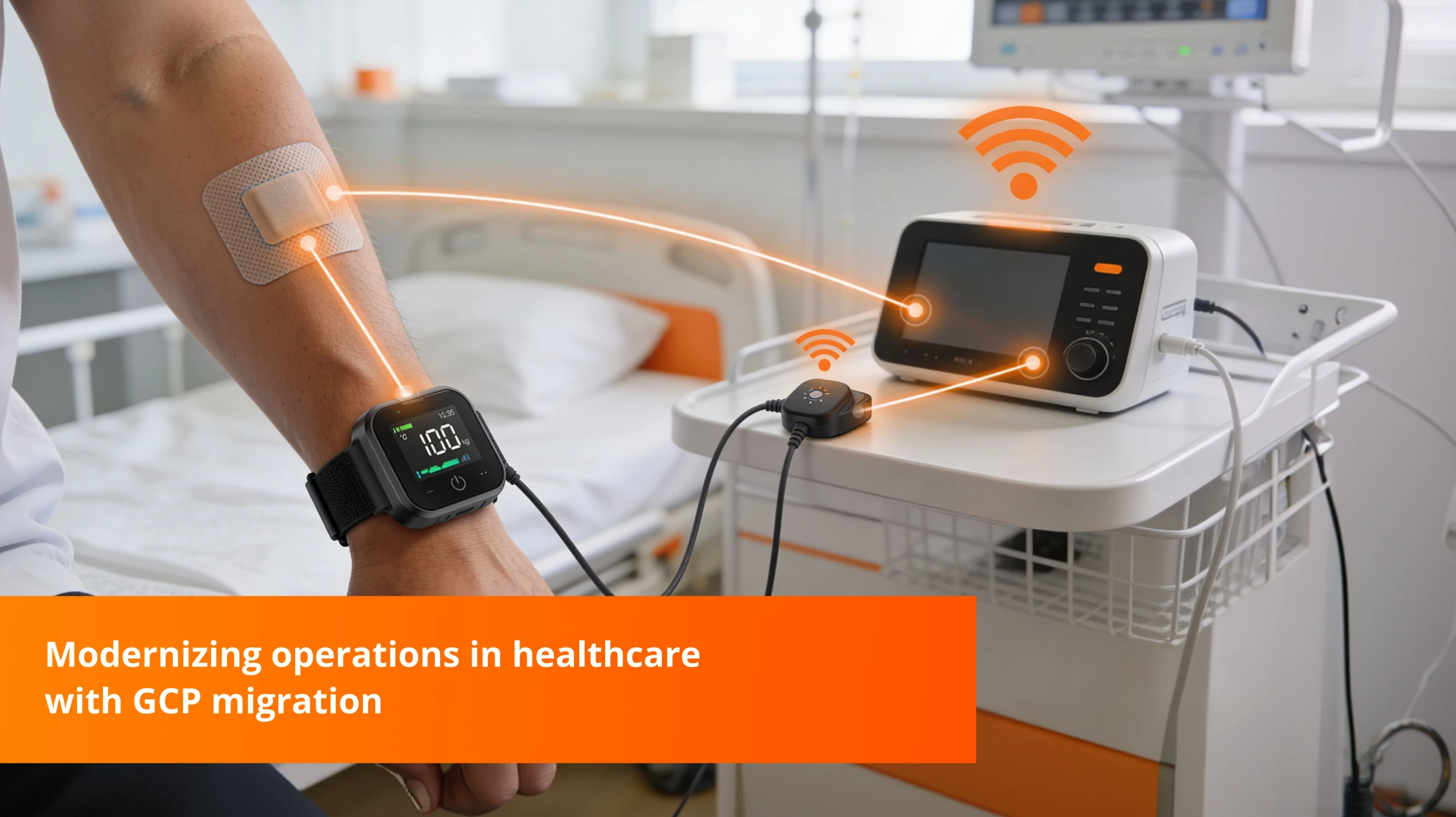
Our client is a US-based healthcare company with over 30 years of experience operating across more than 20 states. After acquiring a subsidiary, they needed to modernize its tech stack, including its Electronic Medical Record (EMR) system and integrate it with the parent company's infrastructure.
The subsidiary ran on MS SQL Server, with dashboards covering patient history, clinic networks, provider data, and insurance information. Migrating this data was necessary for operational continuity, policy alignment, and compliance across the combined organization, all without disrupting access to patient data that clinical staff relied on daily.
What N-iX built
N-iX migrated the subsidiary's data sources and dashboards from MS SQL Server to Google Cloud Platform, implementing an ETL pipeline using Apache Airflow, Python, and DBT to handle data transformation and movement. The team built Airflow DAGs to extract files from the EMR system, store them in GCP, and transfer structured data into BigQuery for analytics.
N-iX also developed a Proof of Concept for a core analytics table covering patient visits and payments, giving the client a foundation for future analytics work. Infrastructure deployment was managed with Terraform, and cost-saving measures, including data storage housekeeping policies, were implemented from day one.
Business value the client got
- Modernized the subsidiary's tech stack and ensured smooth integration with parent company systems;
- Streamlined data processing through an automated ETL pipeline;
- Optimized infrastructure costs through GCP migration and proactive cost-management measures.
Post-acquisition integrations in healthcare carry specific pressure: data must be accurate, compliant, and accessible from day one.

Read the full case study here
Application modernization case study #3: AWS migration and platform modernization for a stock photography platform
Our client operates a leading creative platform for licensing and commissioning images, videos, music, and editorial content, with millions of annual contributors worldwide.
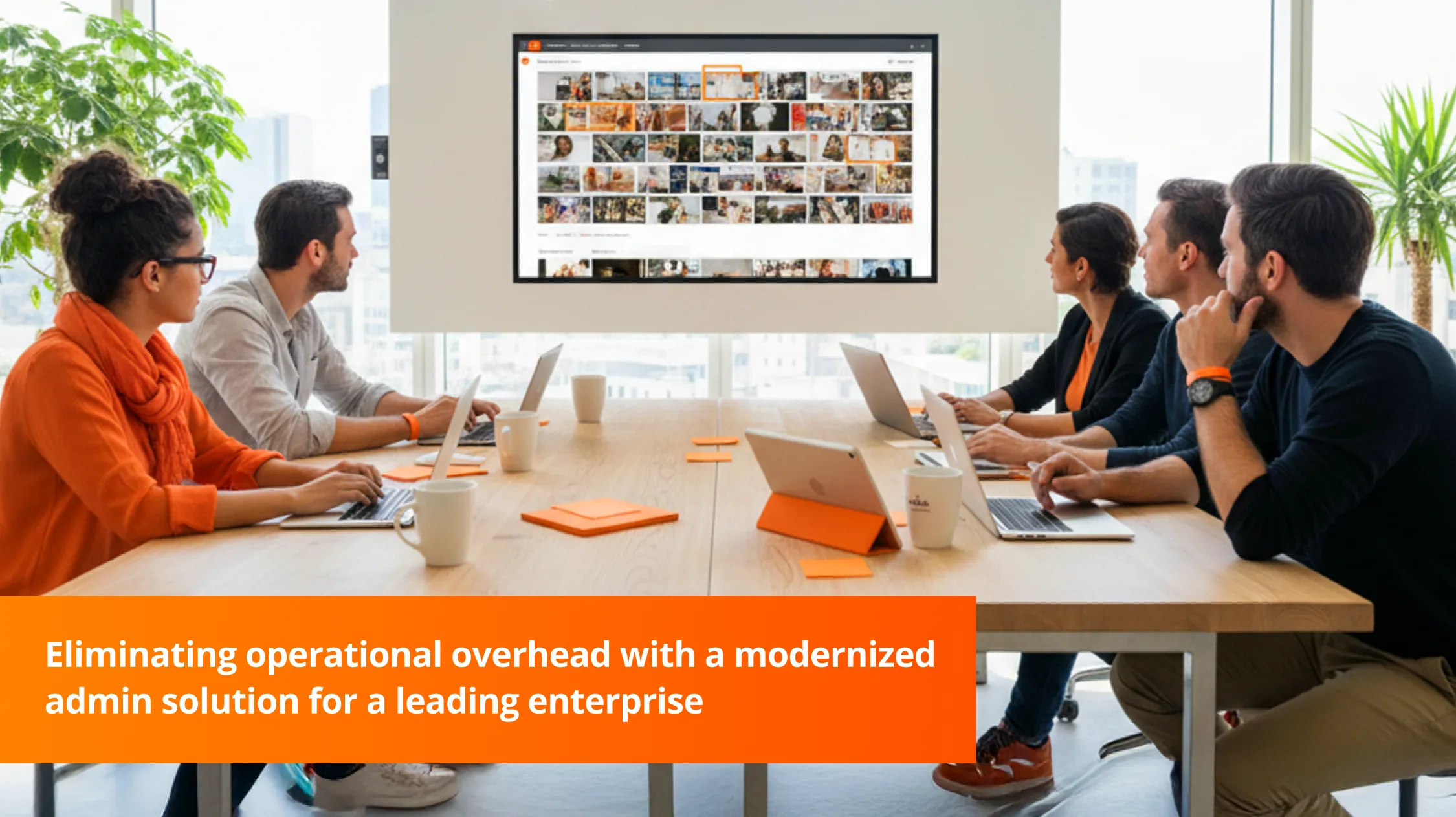
Their legacy admin solution had become difficult to maintain and costly to run on-premises. The modernization scope expanded beyond a front end refresh to include Salesforce customization and, ultimately, AI-powered tooling embedded in the admin experience.
What N-iX built
N-iX began with a thorough assessment of the existing system before building a new admin platform on a fully updated stack: a Node.js proxy back end, a new component library on Material UI, and a React front end updated to the latest version. Code reuse and functional programming practices were applied throughout to keep the system maintainable.
On-premises servers were migrated to AWS, providing elastic scalability and reducing server management overhead. N-iX handled Salesforce customization in parallel by tailoring the platform to the client's business processes with ongoing maintenance, including data cleansing and environment alignment. Finally, N-iX developed a generative AI-powered chatbot assistant for the admin platform, giving internal teams a faster way to navigate and operate the system.
Business value the client got
- Achieved 2x faster platform performance following re-architecture and AWS migration;
- Eliminated operational overhead with a modern, scalable admin solution;
- Reduced server management costs by moving from on-premises to AWS;
- Enhanced internal UX with a generative AI-powered chatbot assistant.
Key takeaway
The 2x performance gain came from addressing all layers of the stack simultaneously: front end, infrastructure, CRM, and AI, rather than patching one at a time.
Application modernization use case #4: Building an access control platform for an outdoor hardware manufacturer
Our client is a Belgium-based manufacturer of locks, fittings, and related components for gates and fences, serving a global clientele across industrial and commercial markets.
Their locking systems are used to secure factory buildings, warehouses, and other non-residential facilities. They consist of three hardware components: a keyboard interface for door and gate access, a relay box that connects to electronic locks, and a gateway that enables remote configuration. The hardware was in place, but there was no software platform to support it. Customers had no reliable way to monitor, configure, or manage the system, especially remotely. The client needed a platform built from the ground up that would make the access control system genuinely usable for their customers in day-to-day operations.
What N-iX built
The N-iX team helped the client evaluate and select the most suitable software and hardware technologies before the development, ensuring the architecture decisions matched both the product's complexity and the end users' expectations.
The resulting platform gives users full visibility and control over the access system from a single interface, such as monitoring status, managing permissions, and configuring the hardware remotely. A particular focus was placed on UI/UX: the interface was designed to surface the right information and actions without requiring technical knowledge to operate. The platform is also fully responsive, accessible from desktops and smartphones alike, which matters for facilities managers and security teams who aren't always at a desk.
N-iX also collected feedback from end users throughout the engagement, using those insights to continuously refine the interface and close usability gaps as they surfaced.
Business value the client got
- A software platform from the ground up that enables the smooth operation of the full access control system;
- Streamlined remote configuration, monitoring, and management with an intuitive, cross-device interface;
- Improved usability iteratively through structured end-user feedback loops.
Wrap-up
Each project started from a different place and required a different technical response. But a few patterns hold across all three: assessment before action, incremental migration over big-bang replacement, and technology choices grounded in the client's operational and regulatory context. All four engagements are also ongoing—a reminder that modernization is a capability built over time, not a project with a finish line.
Why choose N-iX as your application modernization partner?
- Due to our GenAI R&D team and Engineering Management CoE, N-iX will help you scale your digital transformation efforts;
- Our skilled engineers ensure 2–3x faster PoC execution, allowing you to modernize legacy software, applications, and data platforms.
- With over 2,400 experts and over 23 years of industry experience, our expertise includes software architecture design, bespoke engineering, cloud, DevOps & SRE services, data analytics, AI and Machine Learning, embedded software, and IoT.
FAQ
What is application modernization?
Application modernization is the process of updating legacy software to improve performance, maintainability, scalability, and integration. It can include code refactoring, cloud migration, architecture changes, UI upgrades, and data platform modernization.
When should a business modernize a legacy application?
Modernization becomes urgent when maintenance costs rise, releases slow down, integrations become difficult, or the system can no longer support security, compliance, or customer experience requirements.
What makes a legacy application modernization case study successful?
A successful application modernization case study shows measurable business results such as faster performance, lower operating costs, better scalability, or reduced manual work, delivered without major disruption to core operations.
What are common application modernization use cases?
Common application modernization use cases include migrating from on-premises infrastructure to the cloud, replacing outdated interfaces, improving system integration, automating workflows, and preparing applications for analytics or AI-driven functionality.
Have a question?
Speak to an expert