
With GDPR enforcement accelerating, DORA now in effect, the EU Data Act fully applied, and the Cloud and AI Development Act entering parliamentary negotiations in 2026, the window for reactive Cloud compliance is closing. Gartner projects that 60% of non-US financial services firms will adopt sovereign clouds by 2028.
The conflict at the center of this shift is structural. GDPR treats data protection as a fundamental right. The US CLOUD Act allows American authorities to compel US-based providers to hand over data stored anywhere in the world, including European datacenters. A server located in Germany does not guarantee legal protection if a US company operates it. For organizations still running critical workloads on non-sovereign infrastructure, this is not a theoretical risk. In 2023, Meta was fined €1.2B for cross-border data transfers that violated GDPR.
N-iX technology experts and solutions architects (operating delivery centers across Poland, Romania, Bulgaria, and Germany) and working daily within the same regulatory environment as their clients and have developed a practical framework for closing this gap. Their analysis covers the five layers of digital sovereignty that most organizations overlook, the key regulatory instruments shaping the landscape through 2028, and six actionable steps: from building a sovereign cloud infrastructure and controlling encryption keys, to classifying data by residency requirements, maintaining audit-ready logging, and designing an exit strategy before it is needed.
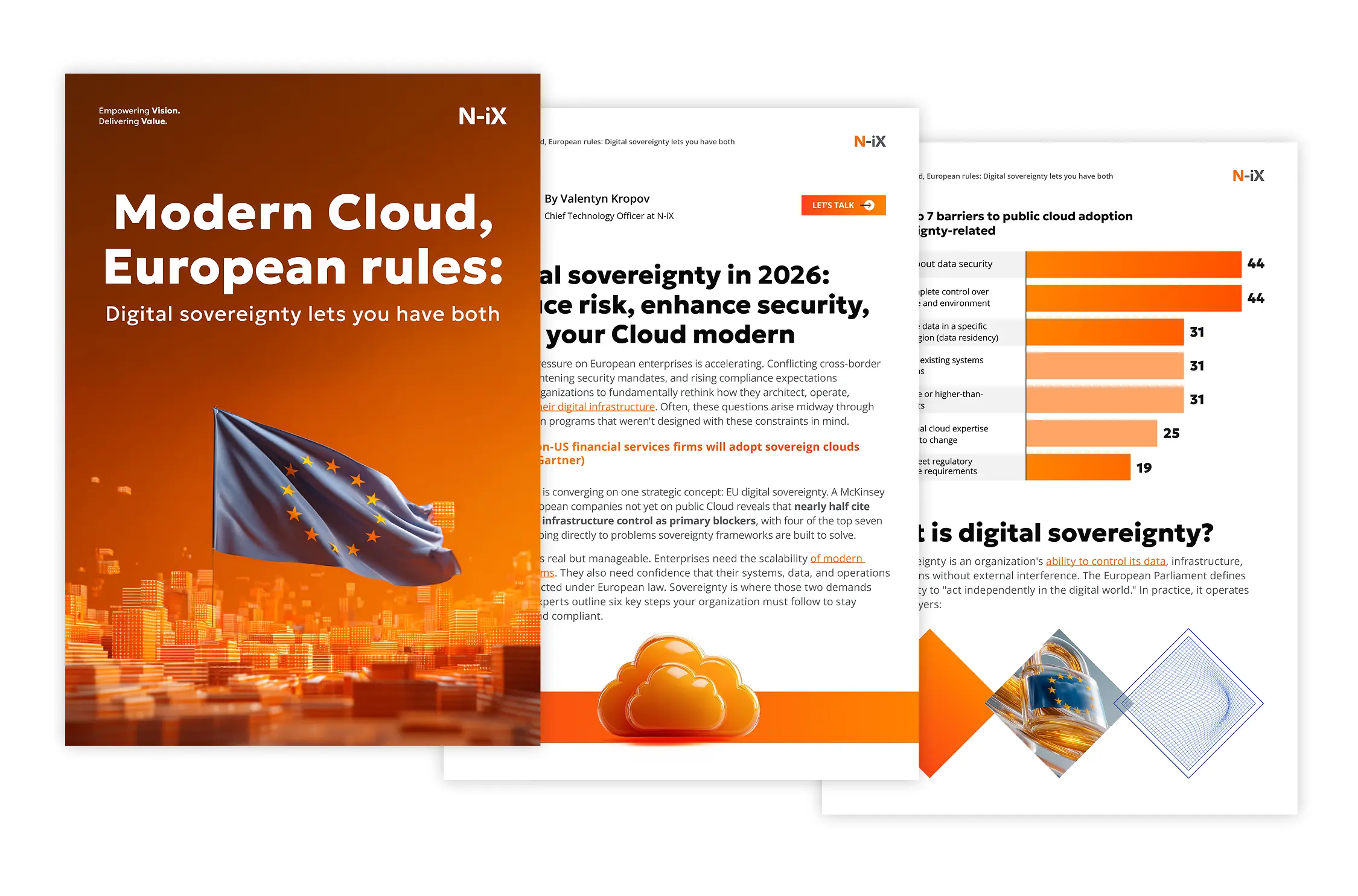
Discover how to align your cloud architecture with European law without sacrificing modernization: full analysis in this guide!
Is your cloud infrastructure exposing you to regulatory risk? Find out!
New EU regulations are rewriting the rules for Cloud operations. Learn the 6 tips that keep you compliant without sacrificing innovation or speed.